What Is Website Design and Website Development?
Website design and website development are two important parts of building a website, but they are not the same thing.
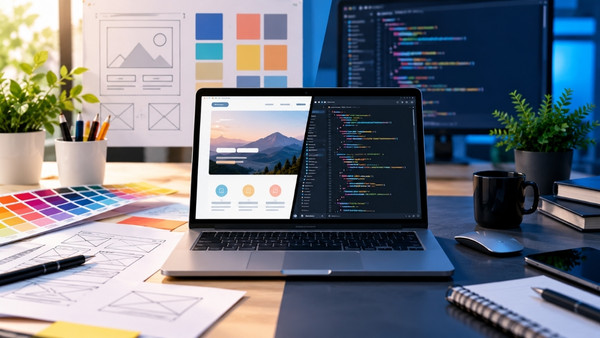
Website design mainly focuses on how a website looks, feels, and works from the visitor’s point of view. Website development focuses on building the technical parts that make the website function.Think of building a website like building a house.
The design is similar to planning how the house will look, where the rooms will be placed, and how people will move through it. Development is the work that turns those plans into a real, working structure. Both are important.
A website can have a beautiful design but poor development. It can also have strong technical development but a confusing design. In both cases, the visitor may have a poor experience.
What Does Website Design Include?
Website design covers the visual and user experience side of a website.
A web designer may work on:
- Page layouts
- Colors
- Fonts
- Images
- Buttons
- Menus
- Page structure
- Visual branding
- Mobile layouts
- User experience
- Calls to action
The goal is to make the website easy to understand and use.For example, a designer may decide where the main heading should appear, where the service information should go, how the navigation menu should look, and where visitors should find the contact button.
What Does Website Development Include?
Website development turns the design into a working website.
Developers may work on:
- Website code
- Content management systems
- Databases
- Forms
- Website functions
- Integrations
- Security
- Performance
- Responsive behavior
- eCommerce features
- Custom applications
Development makes it possible for visitors to interact with the website.For example, when a visitor fills out a contact form and the business receives the message, development is responsible for making that process work correctly.
Is Website Design Only About Making a Website Look Good?
No. Good website design is not only about colors, images, or attractive layouts. It is also about how easily users can find information and complete tasks. A good design should answer questions such as:
- Can visitors understand the business quickly?
- Can they find the right service?
- Can they find contact information?
- Can they navigate the website easily?
- Can they complete a form?
- Does the website work well on mobile?
- Are important actions easy to see?
This is why user experience is an important part of website design.
Is Website Development Only About Coding?
No. Modern website development involves much more than writing code.Depending on the project, development may include setting up a CMS, creating page templates, connecting third-party tools, improving speed, setting up security, developing eCommerce functions, and testing the website.
For example, a business website may need:
- Contact form integration
- CRM connection
- Booking system
- Payment gateway
- Analytics
- Email notifications
- Product management
- Customer accounts
These features require technical work beyond visual design.
How Do Website Design and Development Work Together?
Design and development should work together from the beginning. A designer may create a page layout. The developer then turns that layout into a working page.
During development, some design ideas may need to be adjusted because of technical needs, speed, accessibility, or mobile behavior.This is why communication between designers and developers is important.
A connected process can help avoid problems such as:
- Designs that are difficult to build
- Slow animations
- Poor mobile layouts
- Confusing navigation
- Technical errors
- Poor website speed
- Features that do not work as expected
Why Does a Business Need Both Design and Development?
A successful website needs both a good user experience and reliable technical performance.Imagine a website that looks excellent but takes ten seconds to load. Visitors may leave.
Now imagine a website that loads quickly but has confusing navigation and poor visual structure. Visitors may also leave. Design and development solve different parts of the same problem.
Design helps visitors understand and use the website. Development makes sure the website works properly.
What Is the Difference Between UX and UI Design?
UX means User Experience.
UI means User Interface.
They are related but different.
User Experience
UX focuses on how people use the website and how easy it is for them to complete their goals.
For example:
- Finding a service
- Reading information
- Booking an appointment
- Requesting a quote
- Buying a product
User Interface
UI focuses more on the visual elements users interact with.
This includes:
- Buttons
- Menus
- Forms
- Colors
- Typography
- Icons
- Page layouts
Both UX and UI can contribute to a better website experience.
How Does Responsive Design Fit Into Website Design?
Responsive design means a website adjusts to different screen sizes. A page that looks good on a desktop may not automatically work well on a smartphone.
A responsive website adjusts elements such as:
- Text size
- Images
- Columns
- Menus
- Buttons
- Forms
- Spacing
This helps users browse the website across different devices. For businesses in Chandigarh, Mohali, Zirakpur, and Panchkula, responsive design is important because local customers may discover and contact businesses using their phones.
How Does Development Affect Website Speed?
Development has a direct role in website performance. Poorly built pages can contain unnecessary code, large files, or too many scripts. Developers can improve performance by working on:
- Code structure
- Image loading
- Caching
- Scripts
- Hosting setup
- Database performance
- File sizes
- Page requests
Design also affects speed because large images, videos, animations, and visual effects can increase page size. This shows why design and development should be planned together.
What Role Does SEO Play in Design and Development?
SEO is not something that should only be added after a website is finished. Website structure can affect how easily search engines understand and access a website.
Design and development can support SEO through:
- Clear headings
- Simple navigation
- Mobile-friendly layouts
- Fast loading pages
- Clean URLs
- Internal links
- Image optimization
- Proper page structure
- Search-friendly content
For example, if a business offers several services, each important service can have its own useful page. This gives users and search engines clearer information about what the business offers.
What Is the Role of a CMS?
A CMS, or Content Management System, allows businesses to manage website content without changing code every time. WordPress is one common example.
A CMS can allow a business to:
- Add blog posts
- Edit pages
- Upload images
- Manage products
- Update service information
- Manage forms
- Add new content
The exact CMS should depend on the website’s needs. DigitalKinetix works with platforms such as WordPress and Shopify while also supporting custom web applications and eCommerce projects.
What Is the Difference Between a Template Website and a Custom Website?
A template website starts from an existing design or structure that is changed to match a business. A custom website is planned and built around the specific needs of the business.
Templates can be useful for some small projects, especially when the needs are simple. Custom development may be more suitable when a business needs:
- Unique features
- Custom workflows
- Special integrations
- Complex eCommerce
- Custom user accounts
- Advanced business systems
- A unique user experience
The right choice depends on the business goals, budget, timeline, and technical requirements.
Can Website Design and Development Improve Lead Generation?
Yes. Both can contribute to lead generation.Design can make calls to action clear and place them where visitors can easily find them.
Development makes sure those actions work correctly. For example, a website may include a “Get a Quote” button. Design determines how and where the button appears. Development makes sure the button opens the correct form and that the submitted information reaches the business. This is a simple example of how both areas work together.
Why Should Businesses Choose a Team That Understands Both?
Working with separate providers for design and development can sometimes create communication problems.
The designer may have one idea while the developer has to build something different.A team that handles both can keep the project more connected.
DigitalKinetix describes its approach as one team covering web design and development alongside SEO, AI automation, social media management, and growth marketing.
This type of connected approach can also help businesses think about the website beyond its launch. The website can be built with future SEO, marketing, integrations, and growth needs in mind.
Which One Comes First: Design or Development?
Usually, a website project starts with planning and design before the main development work begins. A common process may look like this:
Step 1: Research
Understand the business, audience, competitors, services, and goals.
Step 2: Website Planning
Create the site structure and decide what pages are needed.
Step 3: Design
Create the visual layout and user experience.
Step 4: Development
Build the website and add the required functions.
Step 5: Testing
Check mobile devices, forms, links, speed, browsers, and other important functions.
Step 6: Launch
Move the completed website live.
Step 7: Improve
Review website performance and make updates based on real user and business data.
This process can change depending on the size and type of project.
What Should Businesses Consider Before Starting a Website Project?
Before starting a website project, businesses should define their main goals.
Ask:
- What should the website achieve?
- Who are the target customers?
- What services or products need attention?
- Do we need eCommerce?
- Do we need online bookings?
- Do we need custom features?
- Which locations do we serve?
- What marketing will support the website?
- Who will manage the website after launch?
Clear answers can make the design and development process smoother.
FAQ
Q. What is the main difference between website design and website development?
A. Website design focuses mainly on the visual appearance, layout, and user experience. Website development focuses on the technical work that makes the website function.
Q. Can one person handle both website design and development?
A.Yes. Some professionals and agencies offer both services. Larger projects may involve separate designers and developers who work together.
Q. Is website development necessary if I already have a design?
A. Yes. A design file or mockup is not the complete website. Development is needed to turn the design into a working website with real pages, forms, features, and functions.
Q. Should SEO be considered during website design and development?
A. Yes. SEO can be considered from the planning stage so the website has a clear structure, useful content, mobile-friendly pages, good performance, and a strong foundation for search visibility.
Conclusion
Website design and website development are different parts of the same process. Design focuses on how the website looks and how visitors use it, while development focuses on the technical work that makes the website function.For a business, neither should be treated as an isolated task.
A strong website combines clear design, useful content, reliable development, mobile responsiveness, good performance, SEO-friendly structure, and simple ways for customers to take action.
Whether a business needs a simple service website, an eCommerce store, or a custom web application, understanding the difference between design and development makes it easier to choose the right approach.
If you need help with website design, website development, SEO, or a complete digital growth strategy, contact DigitalKinetix to discuss your project and find the right solution for your business.